The Niagara Escarpment Plan

IntroductionIntroduction

The Niagara Escarpment Planning and Development ActThe Niagara Escarpment Plan

The Niagara Escarpment CommissionThe Niagara Escarpment Planning and Development Act

View map of Niagara Escarpment Plan Area


Introduction: Protecting the Niagara Escarpment

Since the early 1970s, the Ontario government has developed a program that aims to protect the Niagara Escarpment from inappropriate land use and development.

The centrepiece of Ontario's regulatory program to protect the Escarpment is the Niagara Escarpment Plan. It is Canada's first and most extensive environmental land use plan. It was developed under the Niagara Escarpment Planning and Development Act and is administered by the Niagara Escarpment Commission (NEC), a provincial agency which performs various functions and exercises certain powers in order to implement the Plan. In addition to the NEC, there are numerous other public agencies which play significant roles in protecting the Escarpment. The centrepiece of Ontario's regulatory program to protect the Escarpment is the Niagara Escarpment Plan.

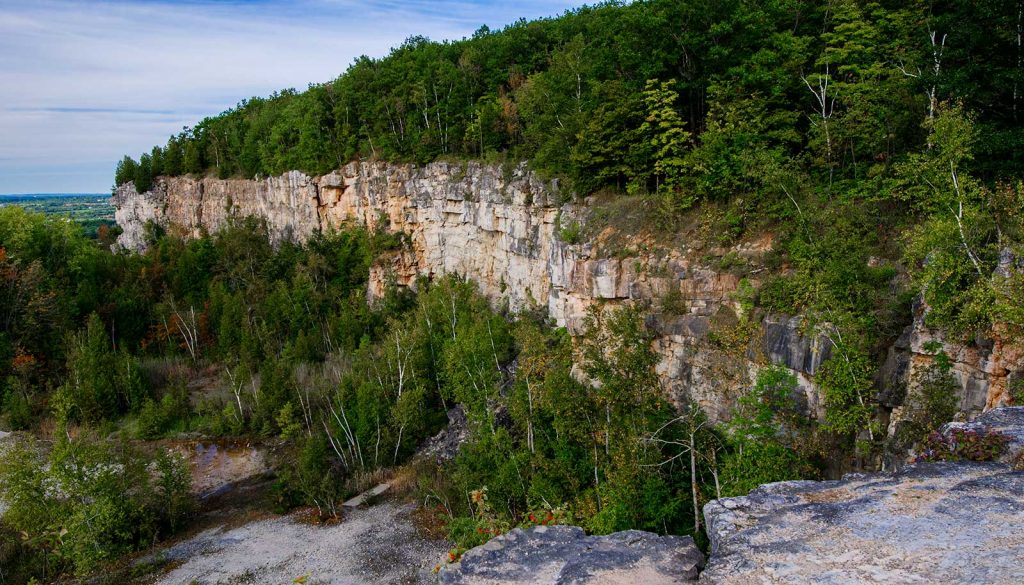
Public concern about protecting the Niagara Escarpment began to emerge in the late 1950s and early 1960s. This concern was focused on the need to regulate the environmental impacts of aggregate pit and quarry operations on or near the brow of the Niagara Escarpment. For example, starting in 1962, from a stretch of Highway 401 west of Toronto, the passing motorist could see (and can still see today) a large gap blasted out of the Escarpment cliff by an aggregate company. In later years, public concern grew to include the need to control the environmental impacts of urban growth within the Niagara Escarpment area.

In response to this growing concern, the Ontario government commissioned a number of studies to identify appropriate measures to prevent or reduce adverse impacts on the Niagara Escarpment's unique ecological, economic and cultural values. In 1968, for example, the ground-breaking Niagara Escarpment Study: Conservation and Recreation Report (also known as "the Gertler Report") was released. This report focused on three main issues: (1) which Niagara Escarpment lands should be protected; (2) how such lands should be protected; and (3) what the priorities were. The report contained recommendations on protecting the Niagara Escarpment through a mix of land acquisition by government, land use regulation of private land, pit and quarry restrictions, and development of a parks system.

The Gertler Report was accepted in principle by the Ontario government of the day, which then began land acquisition, land use regulation, and controls on aggregate extraction in order to safeguard the Escarpment. For example, the government enacted the Niagara Escarpment Protection Act, 1970 and the Pits and Quarries Control Act, 1971, which served to restrict aggregate extraction along the Escarpment. Following up on the Gertler Report, the Ontario government appointed a Niagara Escarpment Task Force in 1972. That group made specific recommendations for implementing the Gertler Report. Those task force recommendations became the basis of the government's 1973 Niagara Escarpment Policy Statement and the Niagara Escarpment Planning and Development Act, passed in the same year. This Act established various policy objectives and procedures intended to protect the Niagara Escarpment in relation to aggregate extraction and urban development pressures, which had been steadily intensifying.


The Niagara Escarpment Planning and Development Act


The purpose of the Niagara Escarpment Planning and Development Act is to protect the Niagara Escarpment from inappropriate development. This purpose is described in section 2 of the Act:

The purpose of this Act is to provide for the maintenance of the Niagara Escarpment and land in its vicinity substantially as a continuous natural environment, and to ensure only such development occurs as is compatible with that natural environment.

The Act also established the Niagara Escarpment Commission and required it to develop a land use plan which would achieve several important objectives, as set out in section 8 of the Act:

  1. to protect unique ecologic and historic areas;
  2. to maintain and enhance the quality and character of natural streams and water supplies;
  3. to provide adequate opportunities for outdoor recreation;
  4. to maintain and enhance the open landscape character of the Niagara Escarpment in so far as possible, by such means as compatible farming or forestry and by preserving the natural scenery;
  5. to ensure that all new development is compatible with the purpose of this Act as expressed in section 2;
  6. to provide for adequate public access to the Niagara Escarpment; and
  7. to support municipalities within the Niagara Escarpment Planning Area in their exercise of the planning functions conferred upon them by the Planning Act.

Given these objectives, it is clear that the main purpose of the Act and the Plan is to protect the natural environment of the Niagara Escarpment and the land in its vicinity. Only those land uses or developments which are compatible with the protection of the Niagara Escarpment environment should be permitted within the Niagara Escarpment Plan Area.

Where there is conflict between the Plan and any municipal plan or zoning by-law, the Plan takes precedence. It is noteworthy that the Act is intended to take precedence over other special or general laws within Ontario. For example, the Act stipulates that provincial projects, municipal projects and by-laws within the Plan Area shall not conflict with the Plan. Similarly, the Act specifies that where there is conflict between the Plan and any municipal plan or zoning by-law, the Plan shall take precedence.

The Act is now under the jurisdiction of the Minister and Ministry of Natural Resources.

The Greenbelt Act 2005 amended the NEPDA. The important changes were:

  1. The NEP now must be reviewed every ten years, rather than five.
  2. The Lieutenant Governor in Council may 'vary, supplement or override any provision in the ... Niagara Escarpment Plan in order to facilitate the effective operation of the Greenbelt Plan'.
  3. Lands designated Escarpment Natural, Escarpment Protection, Mineral Resources Extraction or Escarpment Rural Area can no longer be redesignated to Minor Urban Centre, Urban or Escarpment Recreation Area except at the time of the NE Plan 10-year Review. Further, no other amendment to permit urban uses where they are not currently allowed can be processed until the Review.

View the June 2006 Niagara Escarpment Planning and Development Act (Adobe File - 156 KB) as amended by the 2005 Greenbelt Act


The Niagara Escarpment Plan


Background


View the 2005 Niagara Escarpment Plan (Adobe File - 1.92 MB)

In 1978, the NEC released its preliminary proposals for the land use plan required under the Act. Following public comment on these proposals, the NEC released the Proposed Plan for the Niagara Escarpment in 1979. The land area covered by the Proposed Plan was 63 per cent smaller than what had been shown in the preliminary proposals. This reduction in coverage was the result of political pressure on the provincial government by many private property owners and municipalities. The size of the Niagara Escarpment Plan Area has remained virtually unchanged since 1979 and should be considered the bare minimum needed to protect the landforms and the biodiversity of the Escarpment.

The Niagara Escarpment Plan
In 1980, a public hearing on the proposed plan was held by three specially appointed hearing officers. In 1983, after 26 months of public hearings, the hearing officers released a four-volume report containing numerous recommendations and before the end of the year, the NEC submitted the Final Proposed Plan for the Niagara Escarpment to the Ontario Cabinet for its consideration. On June 12, 1985, the Niagara Escarpment Plan was adopted by the Ontario Cabinet with the support of all three political parties in the Legislature. The Plan was revised and updated by Cabinet in 1994, and again in 2005.

The Niagara Escarpment Plan consists of three parts: Land Use Policies; Development Criteria; and Niagara Escarpment Parks and Open Space System. The Plan also includes appendices and maps. The policies within the Plan apply to lands within the Niagara Escarpment Plan Area.


General Provisions


The introductory section of the Plan includes general statements of purpose and objectives that are essentially the same as those in the Niagara Escarpment Planning and Development Act, as shown above. These provisions are the philosophical basis for the policy framework that guides decision-making in relation to land use regulation and parks/open space management along the Niagara Escarpment.


Land Use Policies


Part 1 of the Niagara Escarpment Plan sets out general land use policies that apply to the Niagara Escarpment Plan Area.

All lands within the Plan Area have been placed into one of seven different land use designations. These designations are set out in different colours within the regional and county-wide maps which are appended to the Plan.

It should be noted that the outer boundary of the Plan Area is precisely fixed and can be changed only by a Plan amendment. However, the internal boundaries between land use designations within the Plan Area are somewhat less precise. In some instances, therefore, you may need to obtain a more detailed boundary interpretation from the NEC or your municipality in order to determine whether a particular designation applies to a specific property.

The Plan's seven land use designations are:

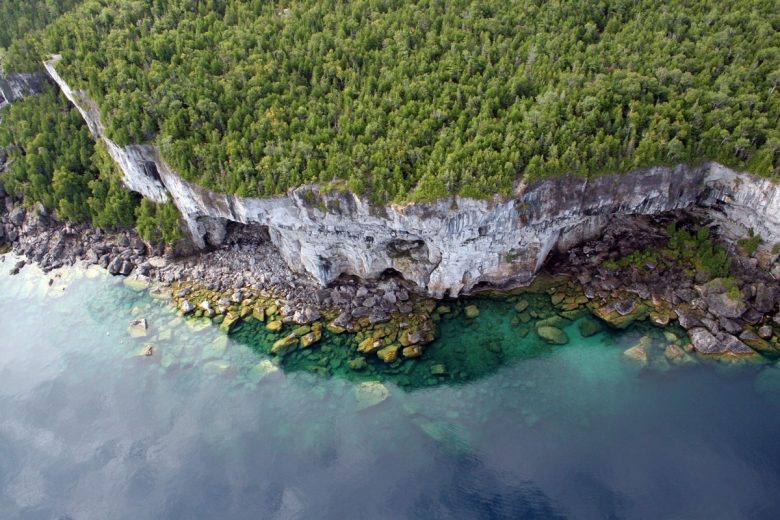
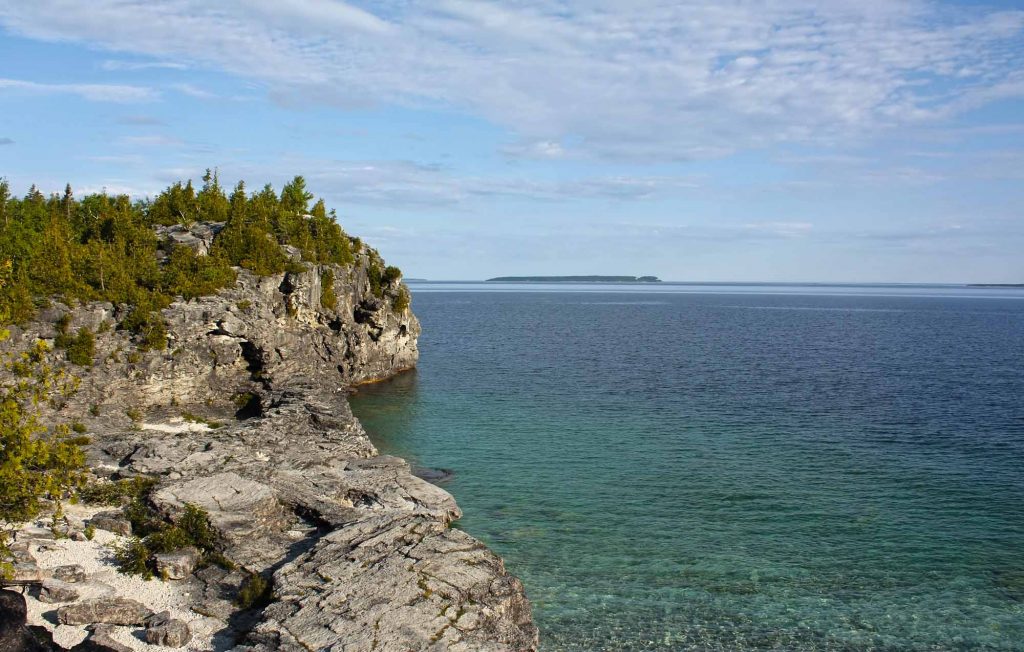
  1. Escarpment Natural Area Is the most protective designation in the Plan. It includes Escarpment cliffs, slopes at the base of cliffs, forested lands on top of cliffs, river and stream valleys, wetlands, and the most significant Areas of Natural and Scientific Interest (ANSIs). The aim is to maintain these lands and features in their natural state in order to protect significant ecological, cultural and scenic values. Only very limited types of development are permitted upon lands in this designation.

  2. Escarpment Protection Area includes Escarpment slopes and related landforms which are visually or environmentally significant, but which have been significantly altered by existing land uses. It also includes regionally significant ANSIs and lands that serve as buffers to protect Escarpment Natural Areas. This designation permits some development and is intended to maintain the remaining natural features and open, rural landscape character of the Escarpment and lands near it.

  3. Escarpment Rural Area includes minor Escarpment slopes and related landforms, as well as lands which are necessary to provide an open landscape and/or are of ecological significance to the Escarpment environment. The intent is to buffer ecologically sensitive lands - Escarpment Natural and Escarpment Protection Areas - and to provide a transitional zone where additional types of agricultural, residential and commercial land uses are permitted. In some instances, lands designated as Escarpment Rural Areas may be redesignated as Mineral Resource Extraction Areas (see below) if certain conditions are met.

  4. Minor Urban Centre identifies rural settlements, villages and hamlets within the Plan Area. It is intended to concentrate further rural growth in these localities in order to prevent sprawl and scattered rural development, and to protect more environmentally significant or sensitive areas. Residential subdivisions are permitted in this designation; however, changes to the boundaries of a Minor Urban Centre require a Plan amendment. A number of development and growth objectives in this designation ensure that natural and cultural heritage values are maintained in Minor Urban Centres.

  5. Urban Area identifies the larger towns and cities within the Plan Area. The intent of this designation is to minimize the impact and further encroachment of urban growth upon the rural Escarpment environment. A wide range of land uses and development are permitted in this designation, subject to certain objectives and restrictions intended to protect adjacent Escarpment Natural, Escarpment Protection, and Escarpment Rural Areas.

  6. Escarpment Recreation Area includes areas of intensive existing or potential recreational development such as ski centres, lakeshore cottage areas and resorts. Various buildings, facilities, commercial establishments and residential developments are permitted in this designation, subject to development restrictions intended to minimize the impact of recreational uses on natural and cultural heritage values.

  7. Mineral Resource Extraction Area identifies pits and quarries licensed under the Aggregate Resources Act and areas where mineral resource (aggregate) extraction may be permitted subject to certain restrictions. A small number of land uses related to aggregate operations are permitted in this designation, including accessory buildings and facilities. However, asphalt plants, concrete plants, brick plants and similar manufacturing uses are prohibited. The aim of the designation is to minimize the impact of aggregate extraction upon the Escarpment, and to ensure that appropriate rehabilitation measures are undertaken and compatible "after-uses" are approved in such areas.


About 93 per cent of the Plan Area has been designated as Escarpment Natural Area, Escarpment Protection Area or Escarpment Rural Area. These are the most protective categories under the Plan.

It is possible to change land use designations and planning policies in the Niagara Escarpment Plan. The Plan amendment process is set out in the Niagara Escarpment Planning and Development Act, and involves opportunities for public participation.


Development Criteria


Part 2 of the Niagara Escarpment Plan contains "development criteria" that set out how permitted development should be undertaken within the Plan Area. It should be read together with Part 1 of the Plan, which lists the types of permitted development for each land use designation.

Important note! The Niagara Escarpment Planning and Development Act defines development as "a change in the use of any land, building or structure." It is illegal to develop property in the Plan Area without the required development permit from the NEC. If someone undertakes illegal development, he or she could be prosecuted under the Niagara Escarpment Planning and Development Act and, if convicted, could be fined up to $25,000 for a first offence and up to $10,000 per day for subsequent offences. Corporations convicted under the Act could be fined up to $50,000 for a first offence and up to $25,000 per day for subsequent offences.

In addition to these court fines, offenders could be ordered to demolish the development and/or restore the land to its former condition. If the person refuses to comply with such an order, the government may have the necessary work done and recover the costs from the person.

The development criteria in Part 2 of the Plan apply to all permitted development in the Plan Area. When a landowner submits an application for a development permit (e.g., to build a house), the development criteria are used by the NEC to evaluate the proposal and decide if a permit should be issued. The development criteria are also used to assess whether municipal planning documents - official plans, secondary plans and zoning by-laws - conform to the Niagara Escarpment Plan.


General Development Criteria


The first section of Part 2 contains a number of general development criteria that provide overall direction regarding development within the Plan Area. These criteria aim "to permit reasonable enjoyment by the owners of all lots that can sustain development."

To achieve this aim, the general development criteria deal with various matters, including hazard lands (unstable soils or flooding), private sewage/water systems, roads, subdivision design, and signage for certain commercial uses.


The Niagara Escarpment Parks and Open Space System


Part 3 of the Niagara Escarpment Plan describes the Niagara Escarpment Parks and Open Space System.

At present, there are over 100 existing and proposed parks and other public open space lands within the Niagara Escarpment Parks and Open Space System. A complete listing of these areas is found in Appendix 1 of the Plan.

The parks and open space system includes two national parks (Bruce Peninsula National Park and Fathom Five National Marine Park) and the National Historic Site Complex at Queenston Heights. The system also includes numerous provincial parks, conservation areas, municipal parks, county forests, and other public open space areas.

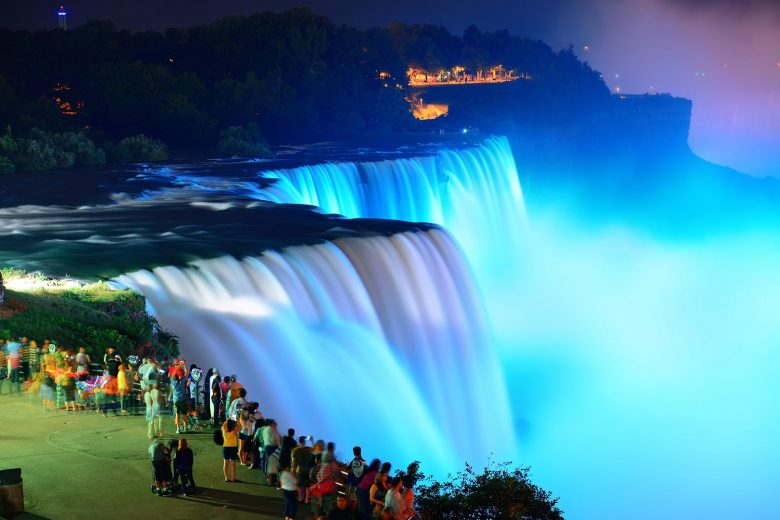
The intent of the system is to protect distinctive natural, historic and cultural features and areas along the Escarpment. Important features include waterfalls, distinctive landforms, and special plant and animal communities. Sites with significant historical or archaeological value are also included in the system.

The majority of these parks and open spaces are, or will eventually be, linked by the Bruce Trail, a 762-kilometre public hiking trail established in the 1960s and extending from Queenston to Tobermory. The planning, development and management of the Bruce Trail is undertaken by the Bruce Trail Association, a charitable non-governmental organization incorporated in 1963. The Association and its nine member clubs are responsible for determining the optimum route for the Bruce Trail, having regard for the development criteria in the Niagara Escarpment Plan. Once lands along the route are acquired by the Bruce Trail Association, the trail corridor is maintained largely by volunteers working through local Bruce Trail Clubs. Much of the Bruce Trail crosses private land and therefore depends upon the goodwill and cooperation of these landowners.

The various components of the Niagara Escarpment Parks and Open Space System are set out in Map 10 and described in Appendix 1 of the Niagara Escarpment Plan. Municipal parks or open spaces which are not identified in Appendix 1 or on Map 10 may be added to the system at the municipality's request and with the agreement of the Ministry of Natural Resources and NEC in accordance with Part 3 of the Plan.

The Ministry of Natural Resources coordinates the administration of the Niagara Escarpment Parks and Open Space system. However, the public lands in the system are owned and managed by numerous agencies and organizations, including the Ministry of Natural Resources, the Ontario Heritage Trust, the Department of Canadian Heritage - Parks Canada, the St. Lawrence Seaway Authority, the Niagara Parks Commission, conservation authorities, municipalities, and the Bruce Trail Association.


To find out how YOU can get involved in making sure that landowners and developers adhere to the Niagara Escarpment Plan, order a copy of CONE's book
Protecting the Niagara Escarpment a Citizen's Guide